Reference Frames as Vectors A Resonance Perspective on Special Relativity
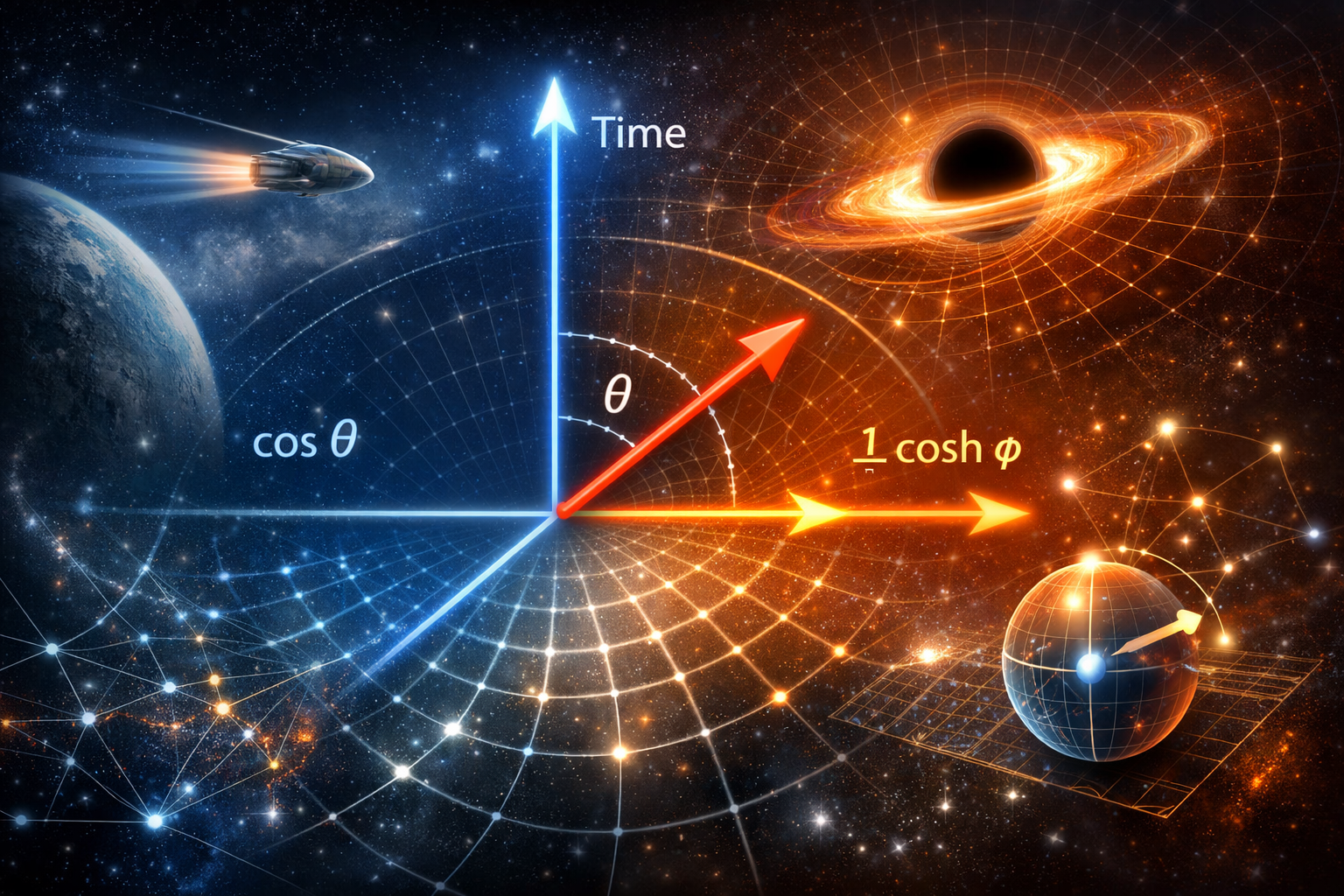 "“Everybody at the party is a many sided polygon....Nonagon!” ― They Might Be Giants"
There are moments when in deep study of a familiar subject when concepts suddenly reveal themselves as masks for something deeper. When things snap into place and what you thought you knew turns on its head. Our existing knowledge seems to re-contextualize around us. What we knew is still true, but yet, somehow different. This is how we build deeper understanding.
Before I share more of Resonance Theory, I want to share some of the things that I noticed before it came to be. The initial patterns I noticed that, when we see them, we may feel they were obvious, and they were. We have seen them before. We just never really connected the dots quite like this to start seeing the bigger picture.
Special relativity—a centuries-old cornerstone of modern physics—has long been understood through the language of spacetime intervals, Lorentz transformations, and the inexorable constancy of light. Yet beneath these formulations lies a simpler truth, one that speaks in the ancient tongue of vectors, inner products, and geometry.
What if the relationship between reference frames could be understood as nothing more than the alignment of arrows in an abstract space? What if time dilation—that strange stretching of moments between moving observers—were simply the cosine of an angle?
Its more than simplification; its an opportunity to see relativity through a different perspective, one that reveals unexpected connections to other areas in science.
The Geometry of Perspective
Consider what it means to occupy a reference frame- or less formally- a perspective. You stand still while a spaceship hurtles past at 80% the speed of light. From your perspective, the ship’s clocks run slow, its lengths contract. But from the ships perspective, the same happens to you. Neither view more correct than the other; both are complete descriptions of reality from different vantage points.
How do we traditionally handle the relationship between these frames?
The standard machinery of special relativity gives us Lorentz transformations—a set of equations that convert coordinates from one frame to another:
where the Lorentz factor (γ) is defined as:
To calculate time dilation, we invoke the transformation, track which frame is “primed,” manage factors of γ, and extract the result from the algebra. To compose velocities, we apply a non-intuitive addition formula. To handle motion in three dimensions, we deploy 4×4 matrices. To understand Thomas rotation—the subtle procession that emerges from successive boosts—we wade through considerable mathematical machinery.[1][2]
If that sounds like a lot of complicated work, it is. The formalism is powerful but opaque. And it does work, it has for over a century now. It has been verified to extraordinary precision. But it carries significant cognitive (and computational) overhead.
But what if we stepped back to question our assumptions. What if we ask a simpler question: what quantities actually characterize the relationship between two reference frames?
Two numbers emerge as fundamental. The first is the velocity itself—v, expressed as a fraction of light speed. This captures the spatial relationship between frames, the rate at which the moving observer traverses space relative to the stationary one.
The second is the time dilation factor—
This captures the temporal relationship between frames, the rate at which the moving observer’s clock ticks relative to the stationary observer’s clock. A spaceship at 0.8c experiences time at 60% the rate of a stationary clock. This factor, often written as 1/γ, is one of the most fundamental quantities in special relativity.
Here is where something remarkable reveals itself. These two quantities—velocity and the time dilation factor—are not independent. They satisfy a constraint:
Two quantities. Squared and summed. Equal to one.
Perhaps you recognize the shape. It is the equation of a circle. Or more accurately, it is the condition that defines a point on the unit circle—an arrow of length one, pointing somewhere in a plane.
The velocity and the time dilation factor are not merely related quantities that we calculate separately. No, they are related. They are the two components of a single geometric object. They are the horizontal and vertical reach of an arrow constrained to have length one. Orthogonal vectors, one a projection of the other.
This constraint opens a new door: we can represent any reference frame as a vector.
The first component—the time dilation factor—extends along what we might call the temporal axis. The second component—the velocity—extends along the spatial axis:
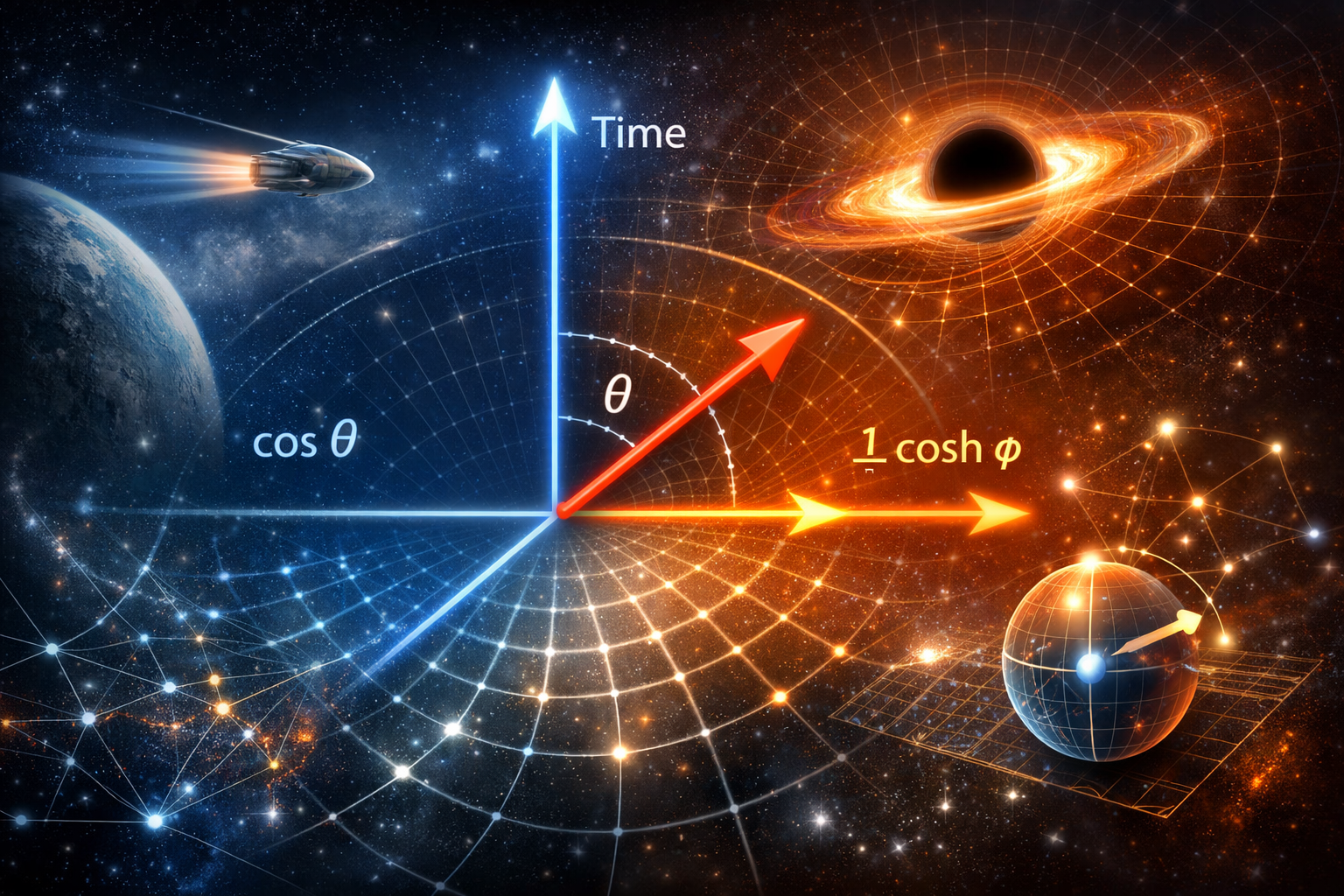
Figure 1: The "Unit Frame" Vector. The relationship between velocity (v) and the time dilation factor is a geometric constraint. They are the components of a single unit vector, F(v).
Consider what different frames look like in this representation. A frame at rest, where v = 0, points straight along the temporal axis:
Pure temporality. No spatial component. This is the arrow of an observer for whom time flows at its maximum rate.
Now consider that spaceship at 80% light speed. Its reference frame vector:
The arrow has transformed slightly. It still has length one—it must, by the constraint—but it now reaches 0.8 along the spatial axis and only 0.6 along the temporal axis. The temporal component has shrunk. Time, from the perspective of the rest frame, runs slower for this observer.
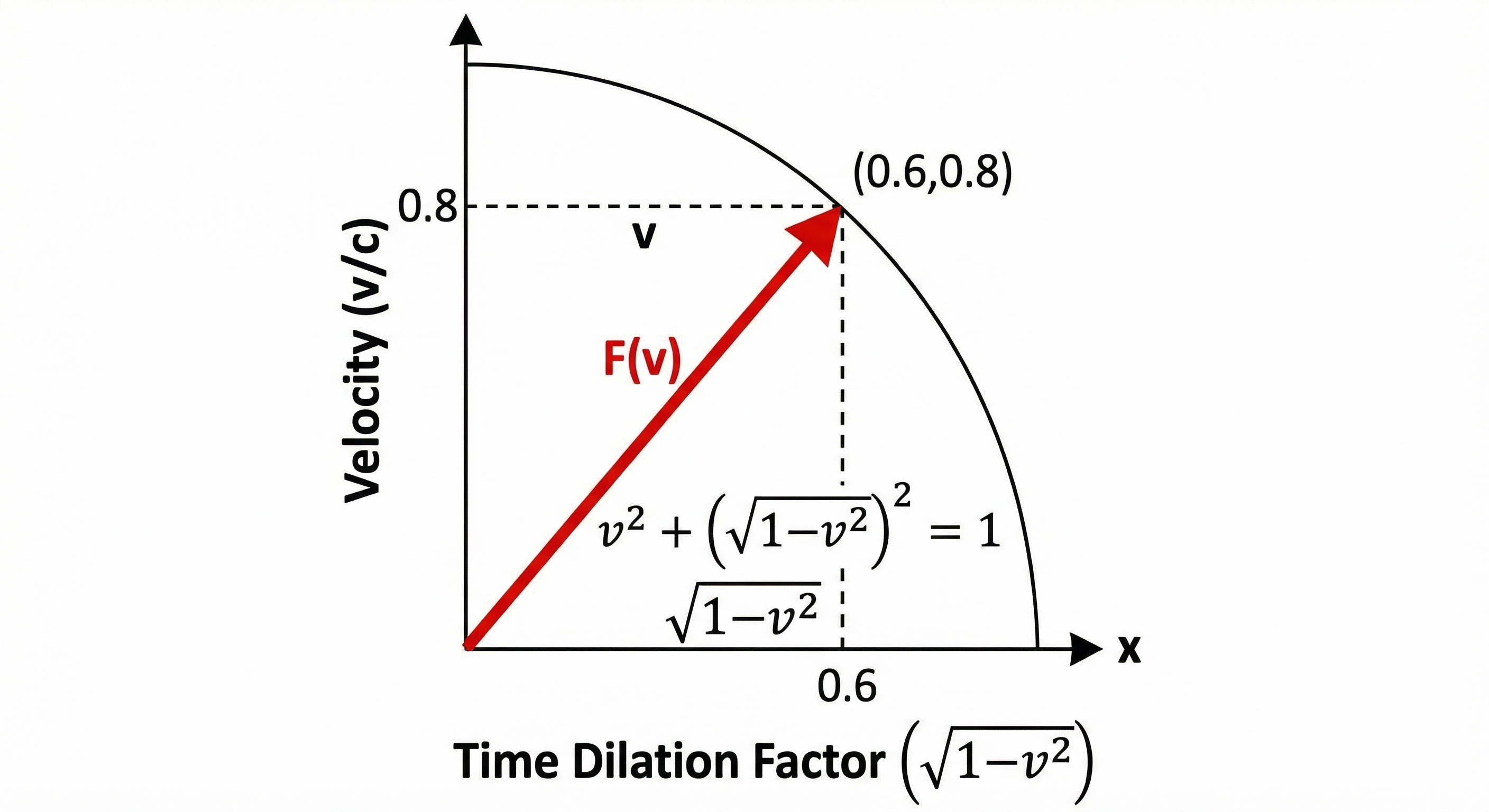
Figure 2: Time Dilation as Alignment. The time dilation factor is the inner product (or projection) of the moving frame's vector onto the rest frame's temporal axis.
As velocity increases toward light speed, the arrow continues to rotate. It sweeps from pointing purely temporal toward pointing purely spatial. At v = 1 (light speed itself), the arrow would point straight along the spatial axis: [0, 1]. Pure spacial component. No temporal component at all. Time stops.
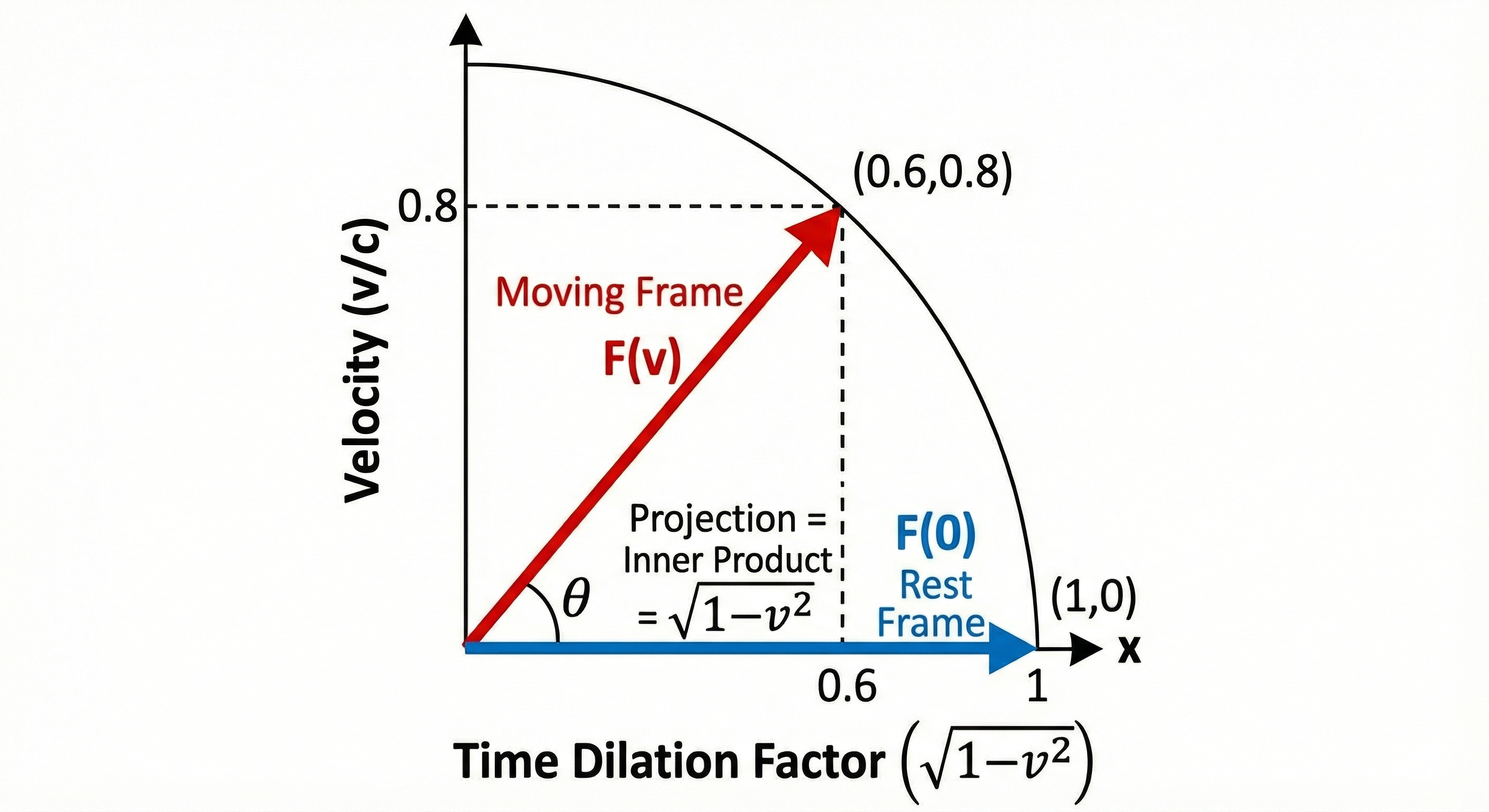
Figure 3: The Geometric Limit of c. At the speed of light (v=1), the vector lies entirely on the spatial axis. The temporal component is zero, meaning time ceases to pass.
We claimed at the outset that the relationship between reference frames could be understood as the alignment of arrows. Two observers, two frames, two arrows in this abstract space. What is the most natural thing to ask about two arrows?
How aligned are they?
This is what the inner product measures. For two unit vectors, the inner product—the sum of the products of their corresponding components—gives precisely the cosine of the angle between them. When arrows point the same direction, their inner product is 1. When perpendicular (orthogonal), it is 0. The inner product captures the alignment between the frames.
Take our rest frame and our moving frame. We can compute their alignment:
The alignment between a rest frame and a moving frame is the time dilation factor!
We have been working in one spatial dimension—motion along a single axis. But the universe permits motion in three dimensions. Does this elegant picture survive the extension?
Consider a spaceship moving not just along one axis, but through three-dimensional space with velocity components vx, vy, and vz. The total speed is the magnitude of this velocity vector:
The same constraint applies. The time dilation factor remains √(1-|v⃗|²), where now |v⃗|² accounts for motion in all three directions. And once again, this factor and the velocity components satisfy a unit constraint—they are the components of a vector with length one.
The reference frame vector simply gains additional components:
Four components now. One temporal, three spatial. Still a unit vector.
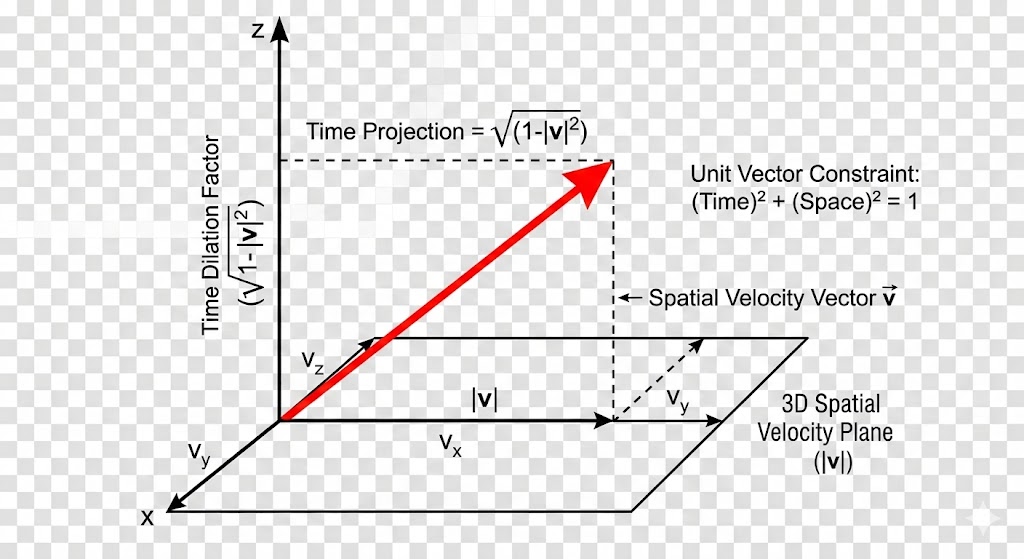
Figure 4: The 4D Vector in 3D Space. Even with motion in three spatial dimensions (vx, vy, vz), the time dilation factor is still just the projection of the unit vector onto the single temporal axis.
A rest frame still points purely along the temporal axis:
To compute the alignment between a rest frame and this moving frame:
The time dilation factor. Again. Unchanged.
The geometric insight does not merely survive the extension to three-dimensional motion—it carries over without modification. The alignment between reference frame vectors remains the time dilation factor, regardless of how many spatial dimensions we include.
This is not a coincidence. It is a sign that we have found something structural rather than accidental.
Summary
Once we construct this representation, the inner product between reference frame vectors immediately gives us the time dilation factor. No transformation equations required. No tracking of primed and unprimed coordinates. Just the dot product of two arrows.
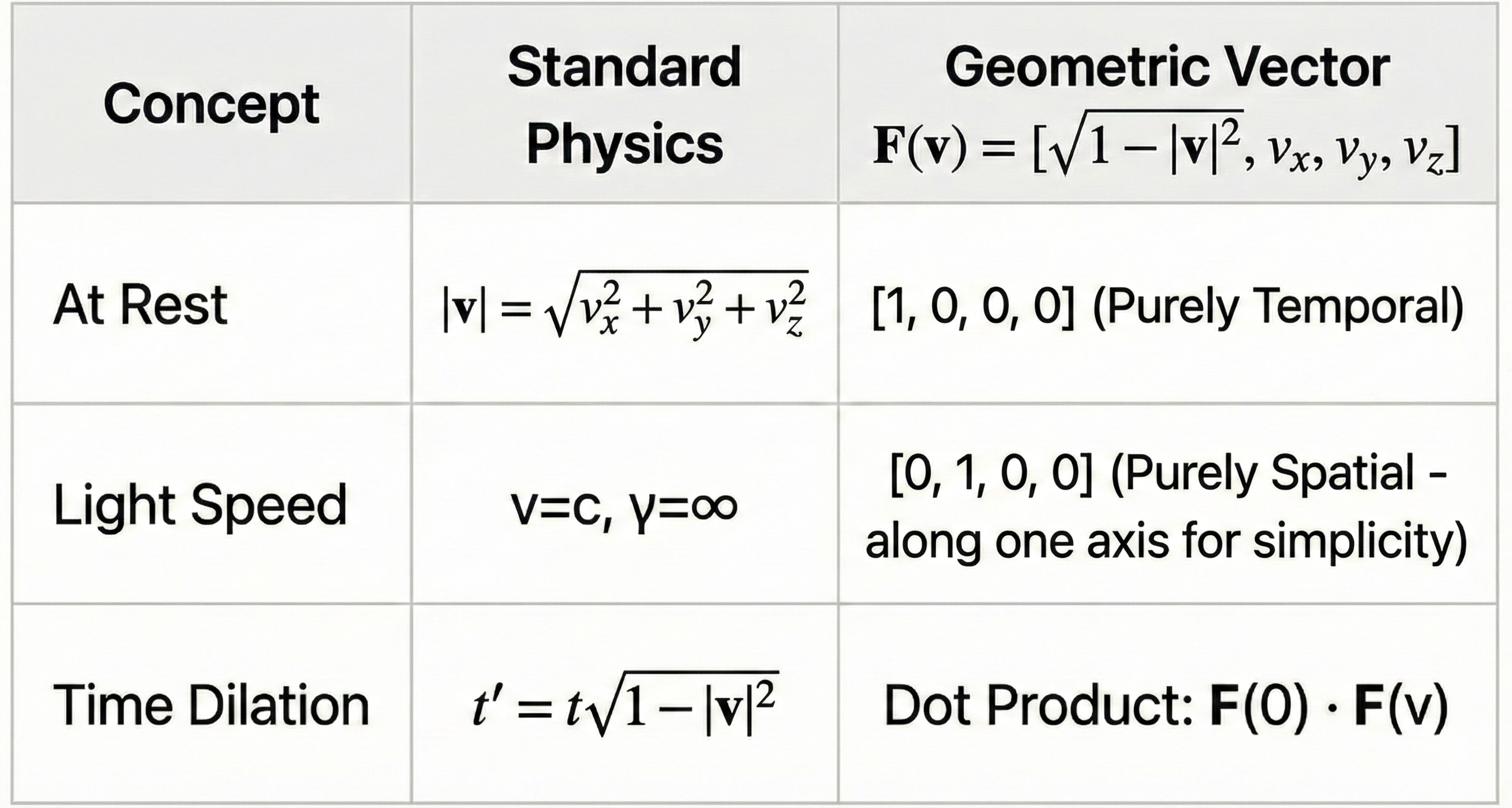
Table 1: A Comparison of Standard Physics and the Geometric Vector Perspective. This table highlights how the abstract concepts of relativity can be re-contextualized as simple geometric relationships.
This geometric interpretation does not need to replace the standard formalism of special relativity. It complements it, providing a visual and intuitive framework for understanding what the equations describe. For those who think geometrically, it offers a new way to see an old theory.
The vector representation also opens doors to further exploration—how geometric understanding extends to three-dimensional motion, how it connects to other areas of physics, and what it might reveal about the deeper structure of spacetime.
If you have been following along, this structure might feel familiar.
The inner product—the alignment between vectors—keeps appearing. In quantum mechanics, the relationship between two states is determined by their inner product, the cosine of the angle between them in Hilbert space. In semantic space, the relationship between two word meanings is captured by the same operation: the cosine of the angle between their embedding vectors. And now, in special relativity, the relationship between two reference frames—how time flows differently for observers in relative motion—emerges as the inner product between their frame vectors.
Three domains. Three different starting points. The same geometric operation at the heart of each.
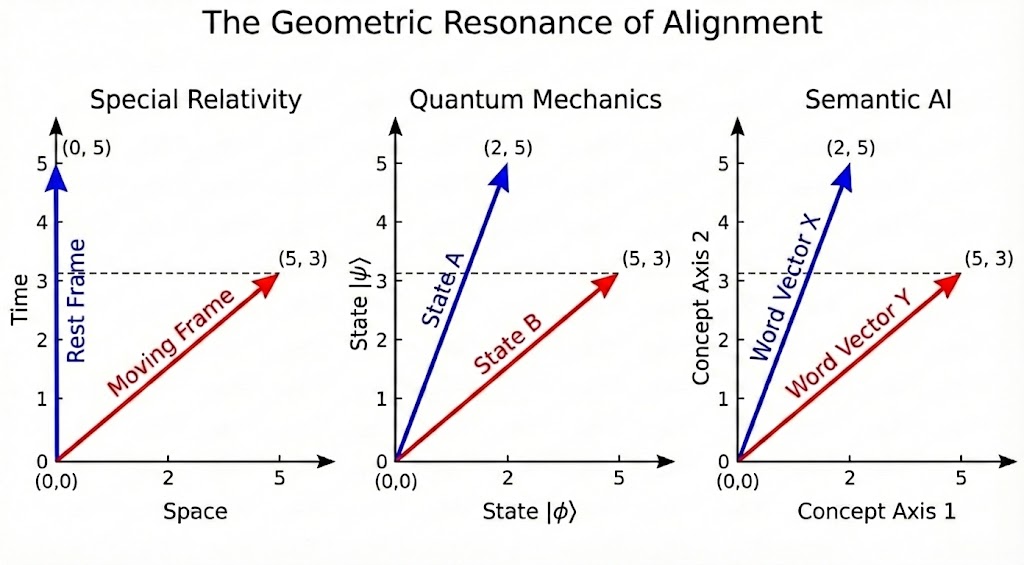
Figure 5: The Geometric Resonance of Alignment. Three different domains—Special Relativity, Quantum Mechanics, and Semantic AI—all use the inner product of vectors to measure the fundamental relationship between states.
This is an example what I have been calling resonance: the constraint-bounded capacity for alignment among possible states.[3] In quantum mechanics, states align within the constraints of Hilbert space. In language, meanings align within the constraints of semantic geometry. In relativity, reference frames align within the constraints imposed by the speed of light.
The constraints differ. The alignment operation does not. The structures appear invariant. That is the hypothesis that I am testing anyway.
This could be pointing at something deeper—a shared structure underlying domains we have treated as separate.
The constraints seem to represent the very edges of what is possible for the system in question. There are more examples of this I have explored. I will explore more in the future. I have a feeling they might be quite common. But that is just a hunch. I won’t know, or at least think I know, until I look.
What I can say is that every time I look through this lens, the same shapes appear. Not forced. Not analogized. Just there, waiting to be noticed.
This discovery has been one of the coolest for me, and one of the earliest. I hope you think its cool too.
I hope you join me while I share what I have uncovered. The interconceptualist lens on reality will surface some more interesting connections that have been in-front of us the whole time, stay tuned!
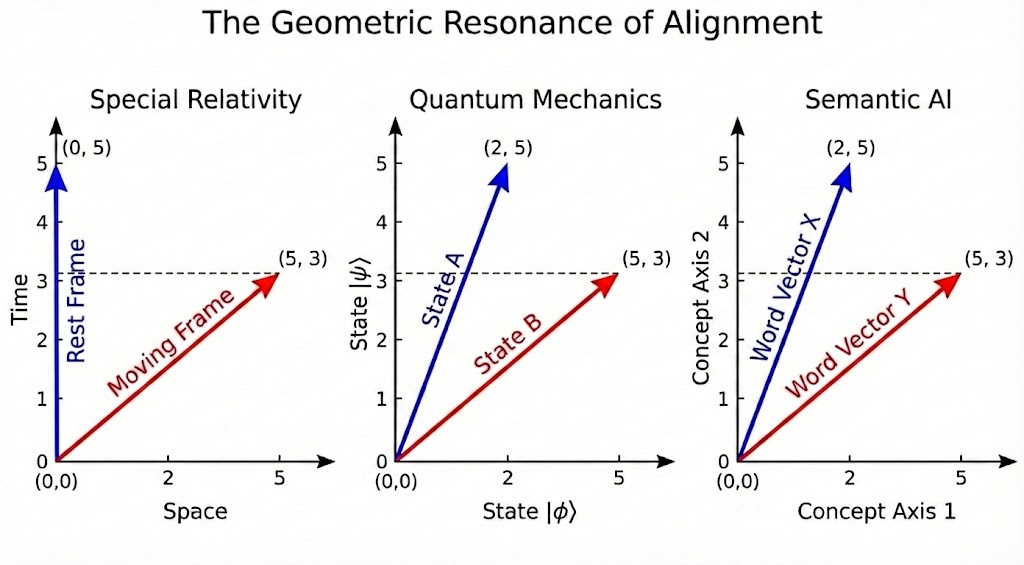
Figure 6: The Edge of Possibility. The speed of light is the "equator" of our reality—the boundary where time stops. All valid reference frames must exist on the surface of this conceptual sphere.
Update 04/28/2026: NotebookLM now has ‘cinematic’ explainers. This is super cool. Here is one on this article:
- Einstein, A. and Calder, N. (2006). Relativity: The Special and the General Theory. Penguin Books.
- Lorentz transformation. (n.d.). In Wikipedia. Retrieved January 31, 2026, from https://en.wikipedia.org/wiki/Lorentz_transformation
- D. Grey, “The Resonance Principle,” Daniel Grey (Substack, 2026).
Related Pages
No other pages link to this page.