Anthropocentric Bias
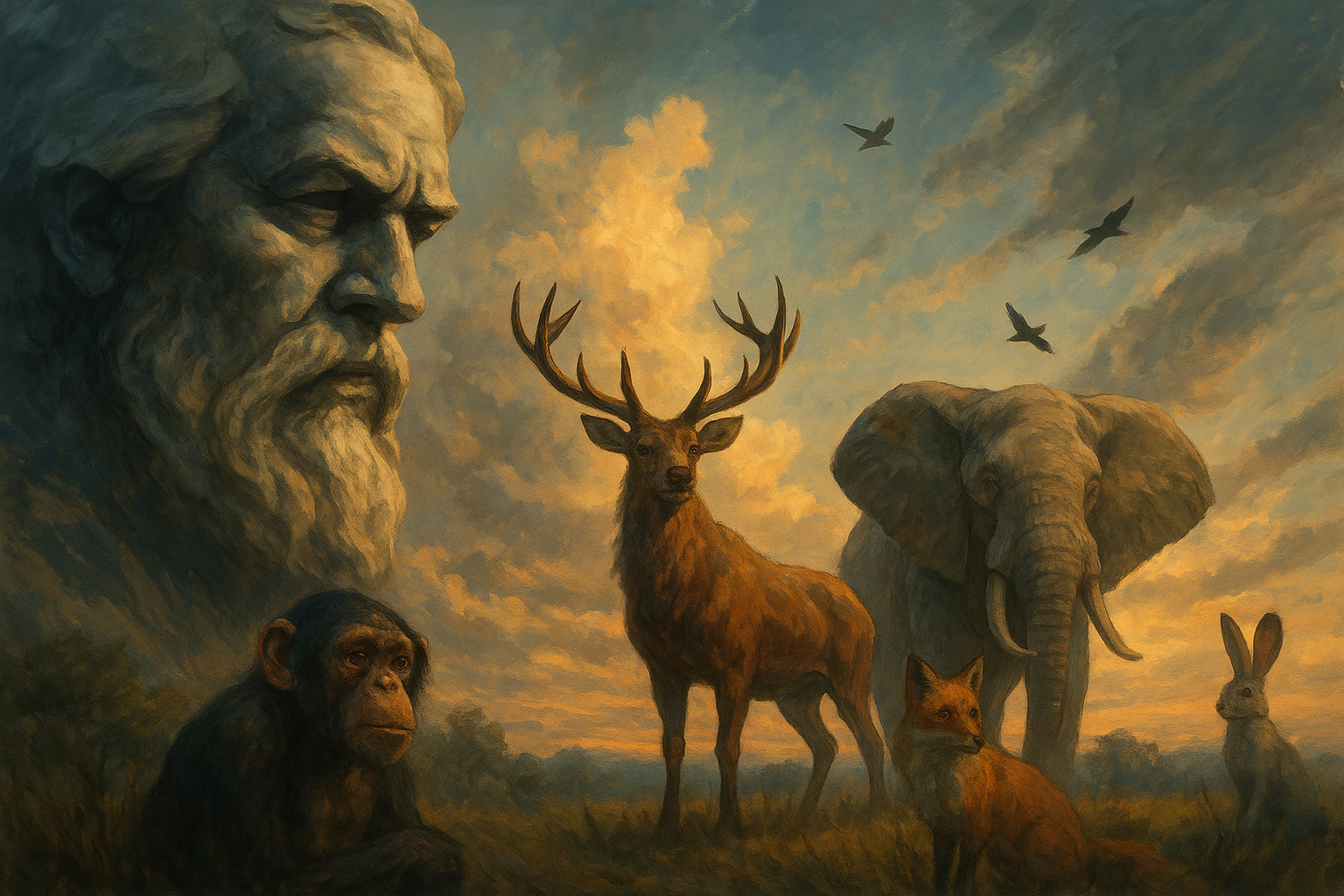 "“Human beings are the only creatures on earth that claim a God and the only thing that behaves like it hasn’t got one.” ― Hunter S. Thompson"
Here’s a fun topic: anthropocentric bias. Basically, it’s our tendency to think humans are somehow the main characters of the universe’s story. It shows up in a bunch of ways: perceptual, descriptive, and normative. Perceptual anthropocentrism is pretty straightforward—we can only understand the world through our human senses, right? What we can see, hear, touch, taste, and smell. Descriptive anthropocentrism is when we try to explain everything in human terms (ever caught yourself thinking your dog is giving you the silent treatment?). And then there’s normative anthropocentrism, where we just assume humans are better than everything else, full stop.
Why does this matter? Because it skews our understanding of reality. If we want to truly understand the world, independent of ourselves, we need to account for these biases rather than unconsciously impose them on everything we study. This isn’t a critique of humanity—far from it. I have a soft spot for humanity myself. But to uncover how things actually work, we need to temporarily remove ourselves from the center of the equation.
This isn’t some new problem we’ve just discovered. Hans Reichenbach, in his book called The Rise of Scientific Philosophy, critiques anthropocentric tendencies as they appear in the philosophical traditions of thinkers like Plato. Plato’s theory of forms, for instance, posits that there exists a singular, perfect form for every imperfect object we encounter in the world. Reichenbach, however, calls this poetry rather than explanatory. He argues that such pseudo-explanations—appeasing our desire for knowledge with pretty analogies instead of well-defined, evidence-based concepts—aren’t science. There is nothing wrong with that if you don’t need to care about science- but if your livelihood depends on it, function over form is what will matter.
Anthropocentric bias isn’t just a relic of ancient philosophy, though—it persists in modern science. It’s especially apparent in the way we approach artificial intelligence. Large language models and other complex AI systems are often discounted because they don’t think or reason like humans. Of course they don’t—they’re not human. But that’s exactly the point. By anthropomorphizing these systems and judging them by human-centric standards, we risk overlooking the unique and valuable ways they process information. Just because AI operates differently doesn’t mean it has no insights to offer.
The problem isn’t that we have biases. Bias is inevitable. It’s part of how we navigate the world. But if we’re unaware of these biases, they blind us to possibilities. Anthropocentric bias, in particular, narrows our field of vision, making it harder to recognize phenomena that don’t fit neatly into human paradigms.
This isn’t about critiquing human exceptionalism or diminishing our achievements. Humanity has accomplished extraordinary things, and we continue to thrive in ways that are worth celebrating. But why would we assume we’re the only ones? Why would we think the universe revolves around us when everything we’ve learned points to the opposite?
We’ve come a long way from the days when we thought the stars were pinpricks in a firmament and Martians lived on Mars. With every discovery, we’ve had to reframe our understanding of the universe and our place in it. That’s the beauty of science—it’s not about what we believe or what feels intuitive; it’s about what works, independent of belief. To move forward, we must embrace ambiguity, let go of outdated assumptions, and open ourselves to the possibility that the universe is far more complex, and far less human-centric, than we once imagined.
Related Pages
No other pages link to this page.